
The Catalyst: Pahalgam Terror Attack
On April 22, 2025, a devastating terrorist attack occurred in Pahalgam, Jammu and Kashmir, resulting in the deaths of 28 civilians, including 25 Indian tourists and one Nepalese national. The attack was claimed by The Resistance Front (TRF), an offshoot of the Pakistan-based Lashkar-e-Taiba (LeT). India held Pakistan responsible for supporting the attackers, leading to heightened tensions between the two nations.
Operation Sindoor: Execution and Objectives
In the early hours of May 7, 2025, India launched Operation Sindoor, a series of precision military strikes targeting terrorist infrastructure in Pakistan and Pakistan-occupied Kashmir (PoK). The operation aimed to dismantle terror camps and eliminate militants responsible for cross-border attacks.
Key Objectives:
- Neutralize terror camps operated by LeT, Jaish-e-Mohammed (JeM), and Hizbul Mujahideen.
- Minimize civilian casualties and avoid escalation.
- Demonstrate India’s commitment to counter-terrorism.
Execution Details:
- The operation lasted approximately 23 minutes.
- Indian Air Force deployed Rafale jets equipped with SCALP missiles and AASM Hammer bombs.
- Indo-Israeli SkyStriker loitering munitions were utilized for precision targeting.
Targeted Locations
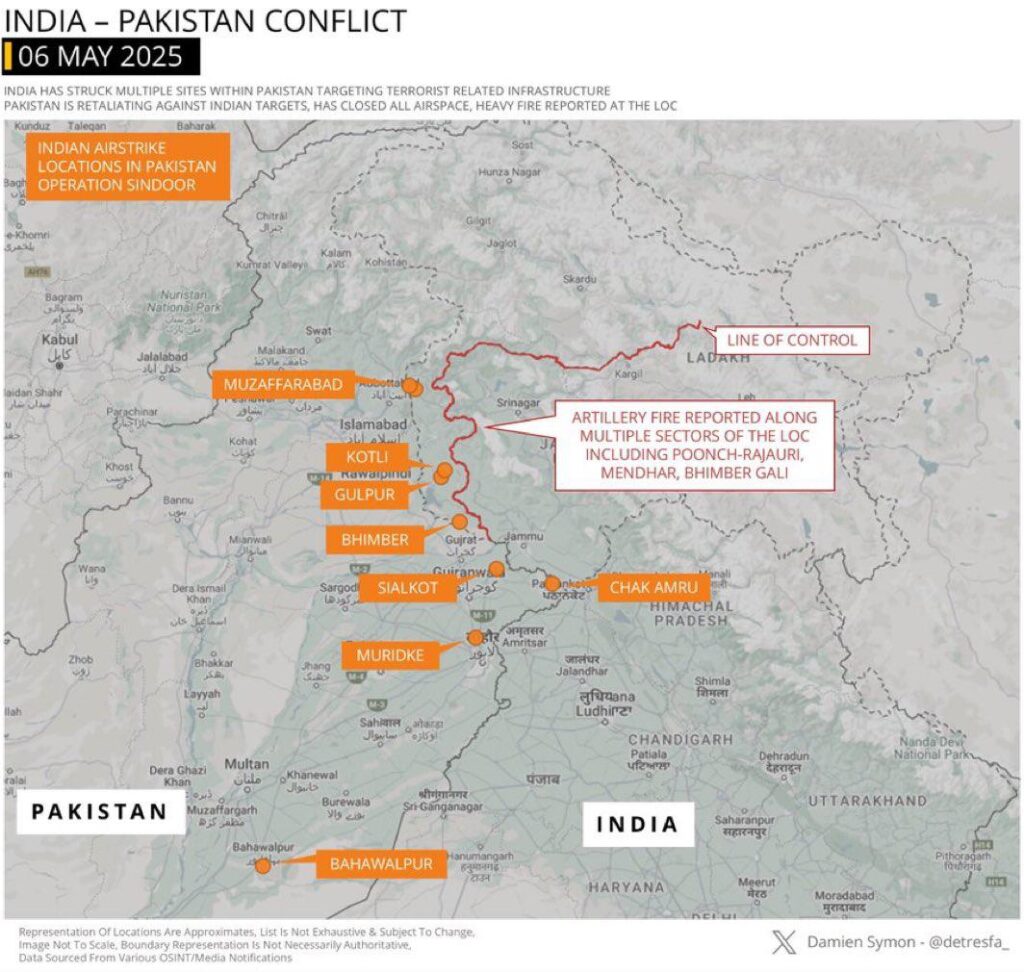
India targeted nine locations associated with terrorist activities:
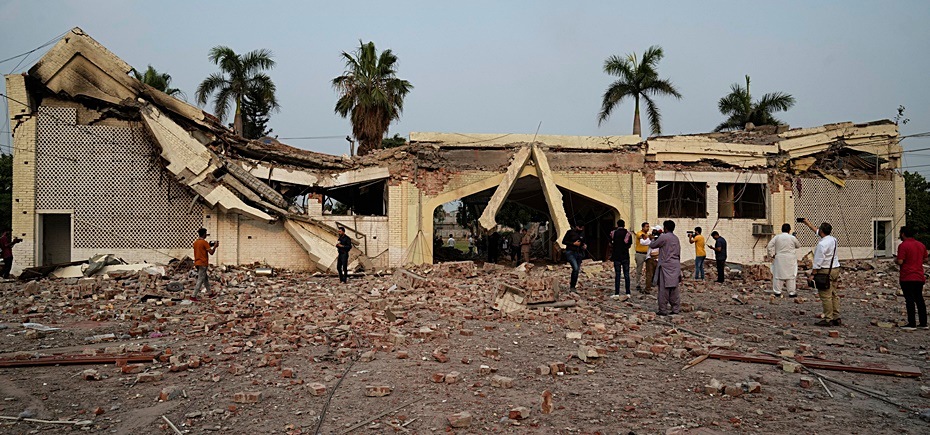
Pakistan (Punjab Province):
- Bahawalpur – Headquarters of Jaish-e-Mohammed (JeM)
- Muridke – Base of Lashkar-e-Taiba (LeT)
- Sialkot – Sarjal camp
- Shakargarh – Terrorist training hub
Pakistan-Occupied Kashmir (PoK):
- Muzaffarabad – Sawai Nala and Syedna Bilal camps
- Kotli – Gulpur and Abbas camps
- Bhimber – Barnala camp
These sites were identified based on intelligence reports linking them to recent terrorist activities.
Casualties and Damage Assessment
Indian Claims:
- Over 100 militants affiliated with JeM and LeT were neutralized.
- No loss of Indian aircraft or personnel.
Pakistani Claims:
- 32 civilians killed, including children.
- 46 others injured.
- Several Indian drones and aircraft shot down.
India denied targeting civilian areas and emphasized the precision of the strikes.
Retaliation and Escalation
Following Operation Sindoor, Pakistan authorized “corresponding actions,” leading to heavy artillery shelling along the Line of Control (LoC). This exchange resulted in the deaths of at least 15 Indian civilians and one soldier. Pakistan also reported the downing of 25 Indian drones and claimed to have inflicted damage on Indian infrastructure. India countered these claims, stating that its S-400 air defense systems successfully intercepted Pakistani drones and missiles targeting Indian cities, including Amritsar. India also reported neutralizing Pakistan’s air defense system in Lahore.
International Reactions
The international community expressed deep concern over the escalating conflict.
- United Nations: Called for restraint and dialogue between India and Pakistan.
- United States: Offered to mediate and urged both nations to avoid further escalation.
- European Union: Condemned the Pahalgam attack and emphasized the need for accountability.
- China and Russia: Expressed concern over the rising tensions and called for peaceful resolution.
Former U.S. President Donald Trump offered to mediate between the two countries, emphasizing the need for a peaceful resolution.
Impact on Civil Aviation
The conflict led to significant disruptions in civil aviation:
- Pakistan closed its airspace, affecting over 20 international flights.
- At least 52 flights were canceled.
- Airlines such as British Airways, Lufthansa, KLM, and Air France had to reroute or cancel flights, leading to extended travel times and logistical challenges.
Strategic Significance
Operation Sindoor marked a significant escalation in the India-Pakistan conflict, highlighting the fragile nature of peace in the region. While India emphasized the operation’s precision and focus on terrorist infrastructure, Pakistan’s claims of civilian casualties added to the tensions. The international community’s calls for restraint underscore the potential global ramifications of such conflicts between nuclear-armed neighbors.
Operation Sindoor stands as a pivotal moment in modern Indian military history — a show of strength, resolve, and tactical precision. While it brought justice for the victims of the Pahalgam attack, it also escalated a high-stakes geopolitical standoff in South Asia. India now faces the challenge of managing post-operation diplomacy — ensuring peace while preparing for any potential escalation.